
Prices
Prices and stock come from each retailer's website. Check with the store before you buy.
More from this distillery: All Akashi (Eigashima) whiskies and prices
About
What it is
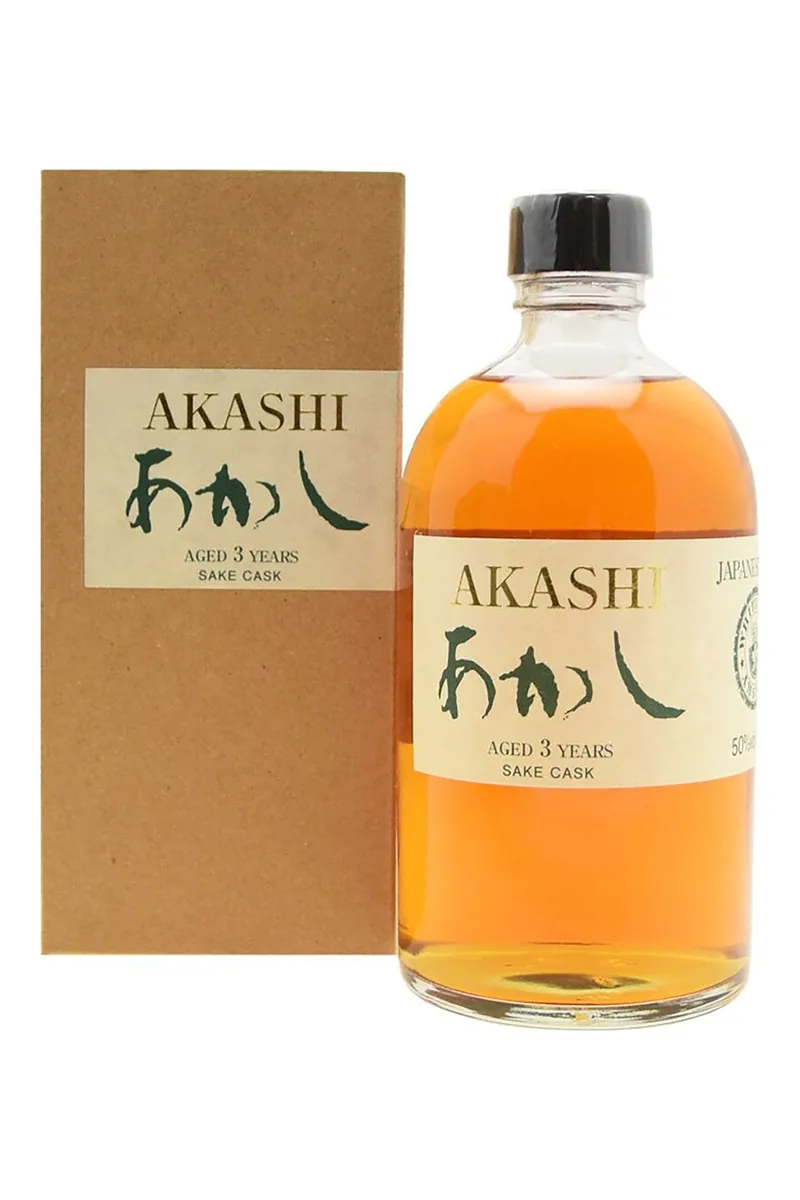
A three year old single malt from Eigashima, the Hyogo distillery that trades as White Oak and sells under the Akashi name. Bottled at 50%. The point of difference is the wood: American oak casks that previously held kijoshu sake.
Where it comes from
Distilled at Eigashima, which has held a whisky licence since 1919, four years before Yamazaki was built, though it didn't release a single malt until 2007. The malted barley is imported from Scotland, which is normal practice and doesn't affect compliance, since the Japan Spirits and Liqueurs Makers Association standard sets rules about where distillation, maturation and bottling happen rather than where the barley grew. Eigashima also bottles blends containing whisky it didn't distil, so we'd want a producer statement before calling this one compliant, and we haven't found one.
How it's made
Kijoshu is the interesting part. It's a rich style of sake made by replacing some of the water in fermentation with finished sake, which leaves it sweeter and denser than standard sake and closer in behaviour to a fortified wine. Casks that held it behave a bit like sherry casks as a result. Eigashima's malt is lightly peated, and the distillery only runs whisky production for a short window each year around its sake and shochu work. Reports vary on whether the three years is full maturation in sake wood or a bourbon base with a sake finish, so treat the exact split as unconfirmed.
What to expect
Walnut and vanilla with a thread of smoke on the nose, then bittersweet orange and something like chocolate covered banana, finishing dry with black tea and leather. It's young and the 50% shows, but the sake casks give it a savoury, umami edge you won't find in the bourbon or sherry versions.
How it compares
The Akashi single malt range is effectively one spirit through different wood, so the bourbon, sherry and wine cask versions are direct comparisons and taste nothing alike. There's also a five year sake cask version, aged four years in bourbon then finished a year in kijoshu wood, which is the more polished of the two.